Don’t rely on those old pop-up timers that come with cheap roasts. They’re liars. Instead, grab a simple instant-read thermometer. It’s like having a tiny superhero in your drawer. Stick it into the thickest part of the ham, avoiding the bone, and watch the needle climb.
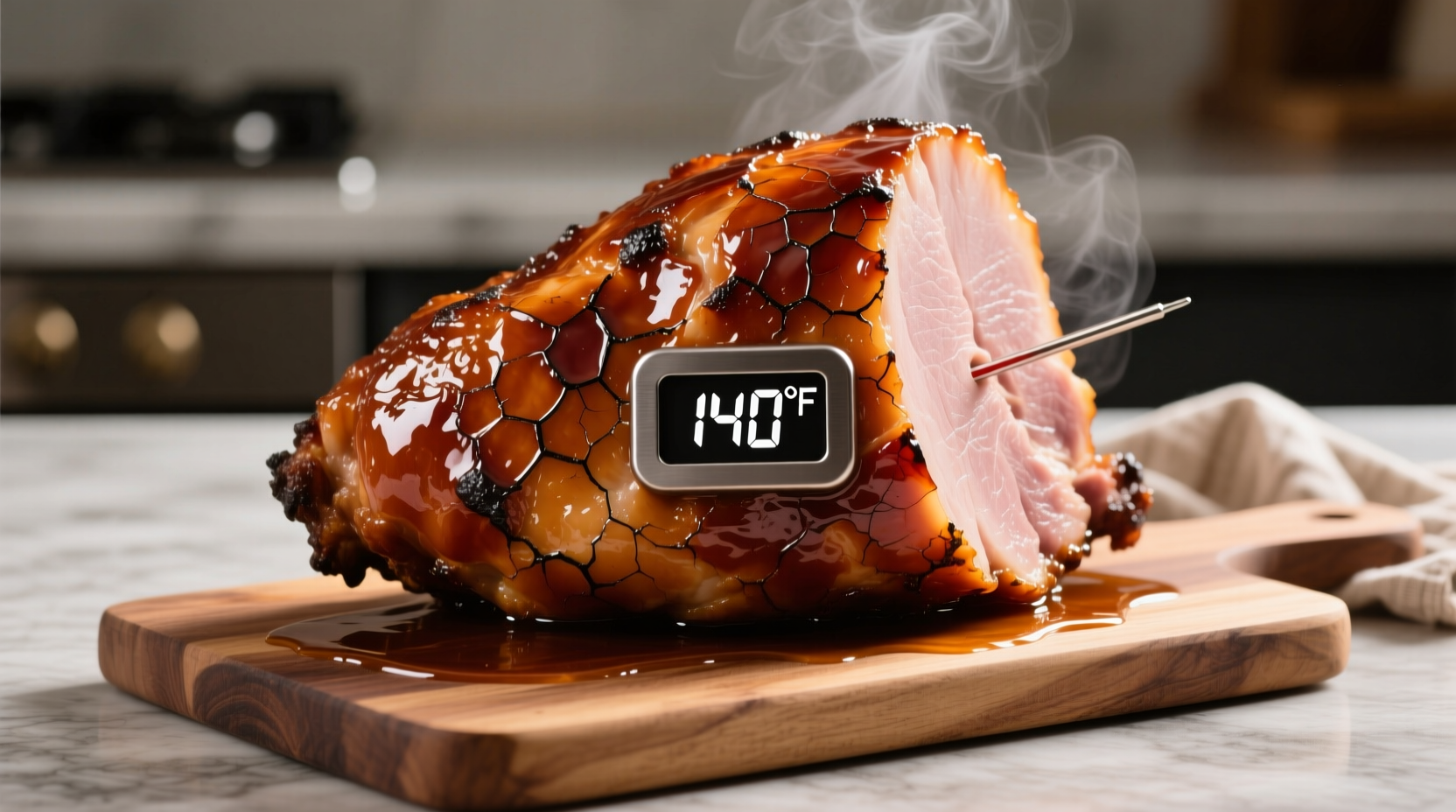 Ham Cooking Temperature Guide: Safe 140°F or 145°F
If 145 scares you because you grew up on “well-done” everything, I get it. My mom used to cook pork until it was the color of a desert. But today’s pork is leaner and safer. You can trust that number. Once you see that juicy, slightly-pink center, you’ll never look back.
What about “resting”? Don’t skip this part
Let me tell you a story. One Christmas, I was so excited to carve the ham that I sliced it straight from the oven. Juice flooded the cutting board like a tiny waterfall. The meat was dry, and I felt like I’d wasted a good ham. That’s when my neighbor, a retired butcher, told me: “Rest it like you rest after a long walk.”
Cover the ham loosely with foil and let it sit for 15 to 20 minutes. During that time, the temperature will rise a few more degrees (that’s called carryover cooking). More importantly, the juices redistribute. When you finally cut into it, every slice is moist and forgiving.