
Now, let’s talk about that bleach or chlorine smell. You might think, “Great, my water is super clean!” But actually, that smell is a tiny lie. Pure chlorine doesn’t really smell that strong. What you’re smelling is chloramine—a compound that forms when chlorine mixes with organic stuff like dirt or sweat. It’s the same reason a pool smells so “pool-y” after a bunch of kids cannonball in.
If your tap water smells like a public pool, it’s usually from the municipal treatment process. They add chlorine to keep you safe from germs, which is a good thing. But if the smell bothers you, try letting a pitcher of water sit in the fridge for an hour. The chlorine gas will escape, and your water will taste as neutral as your aunt’s opinions on politics.
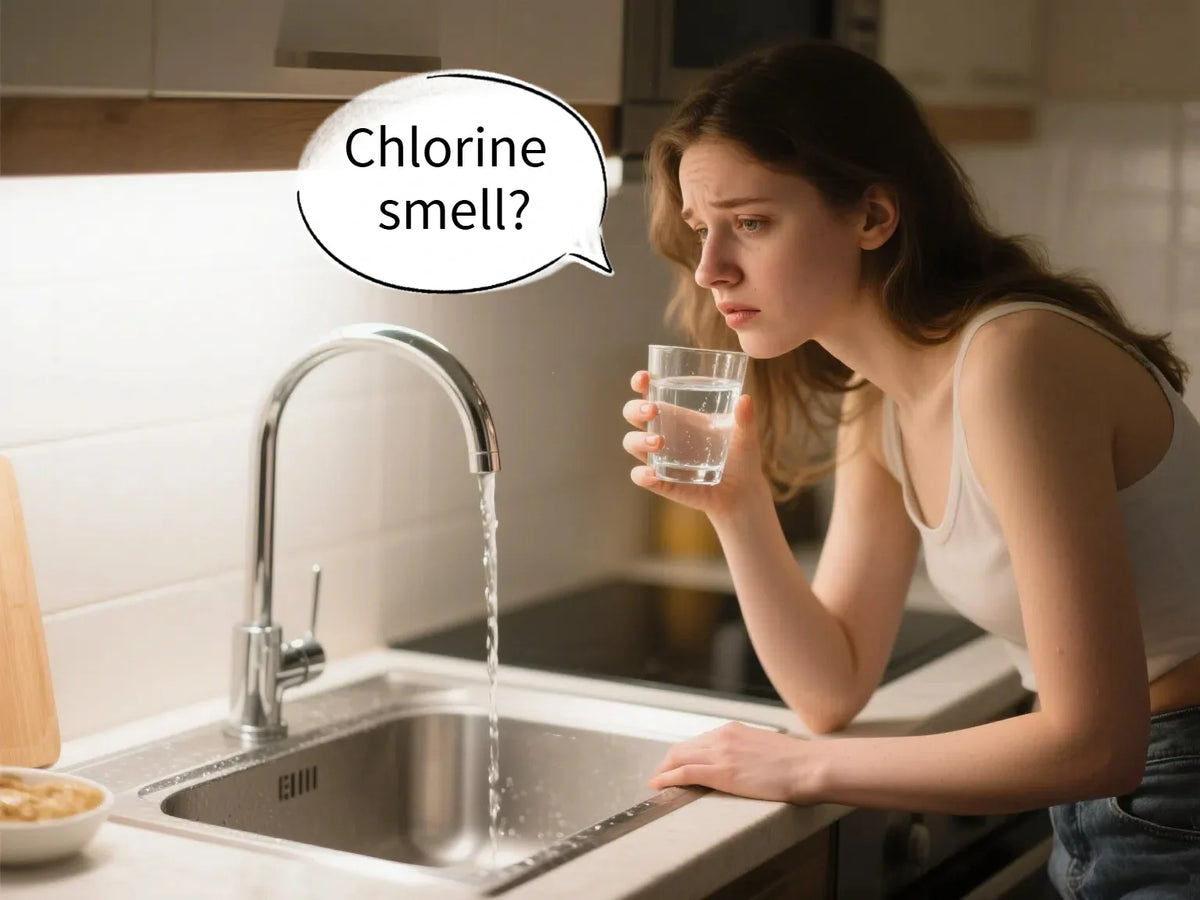 Why Does Water Smell Like Chlorine? Fixes of Chlorine Smell in Water
Wait, Is It the Pipes?
Sometimes, the smell comes from your own home. Maybe your kitchen faucet gives off a musty, dirty-sock odor. That usually means bacteria have set up a little condo in your faucet aerator or your drain. It’s gross, but it’s not dangerous—it’s just a biofilm party. Unscrew the aerator (the little mesh thing at the tip), soak it in vinegar, and scrub it clean. You’ll feel like a plumbing wizard.
And then there’s the metallic, penny-like smell. This one is more serious. If your water tastes like you’re licking a roll of pennies, it could mean your pipes are corroding, especially if you have old copper or galvanized steel plumbing. The metal ions can give water that funny tang. While a little iron or copper isn’t a crisis, long-term exposure isn’t great. A simple water test from a hardware store can tell you if you need a filter.

