When you drop a raw bagel into boiling water, a couple of magical things happen. First, the heat immediately gelatinizes the starch on the outside of the dough. Imagine that! The starch granules swell and form a firm, gel-like barrier. This barrier traps the steam inside, so the dough can’t expand into a light, airy loaf. It stays dense and chewy, which is exactly what we want.
Second, that hot bath sets the crust before the bagel even sees the oven. Think of it like giving the dough a “skin.” Once that skin is formed, the bagel won’t puff up like a balloon when baked. Instead, it holds its shape and develops that beautiful, blistered surface. It’s the difference between a chewy masterpiece and a fluffy imposter. No contest.
And let’s not forget the sheen. That golden, glossy exterior you see on a perfect bagel? That’s from the boiling. The water reacts with the sugars (or malt syrup) and creates a lacquer-like finish in the oven. It’s basically a natural glaze, and it’s gorgeous.
Why Not Just Bake It?
You might be thinking, “Hey, this sounds like a lot of work. Can’t I just skip the boiling and save some time?” Sure, if you hate yourself and texture. If you bake raw bagel dough without boiling, you’ll get something called a “bagel roll.” It’s lighter, fluffier, and has a softer crust. It’s fine for a sandwich, but it’s not a bagel. It lacks the famous chew—that satisfying tug you get when you bite into a real deal.
In fact, the boiling step is so critical that professional bakers guard their water recipes like state secrets. Some use barley malt syrup, others use honey, and some old-school places even add lye (don’t try that at home). Each tweak changes the crust, color, and flavor. It’s chemistry, but the delicious kind.
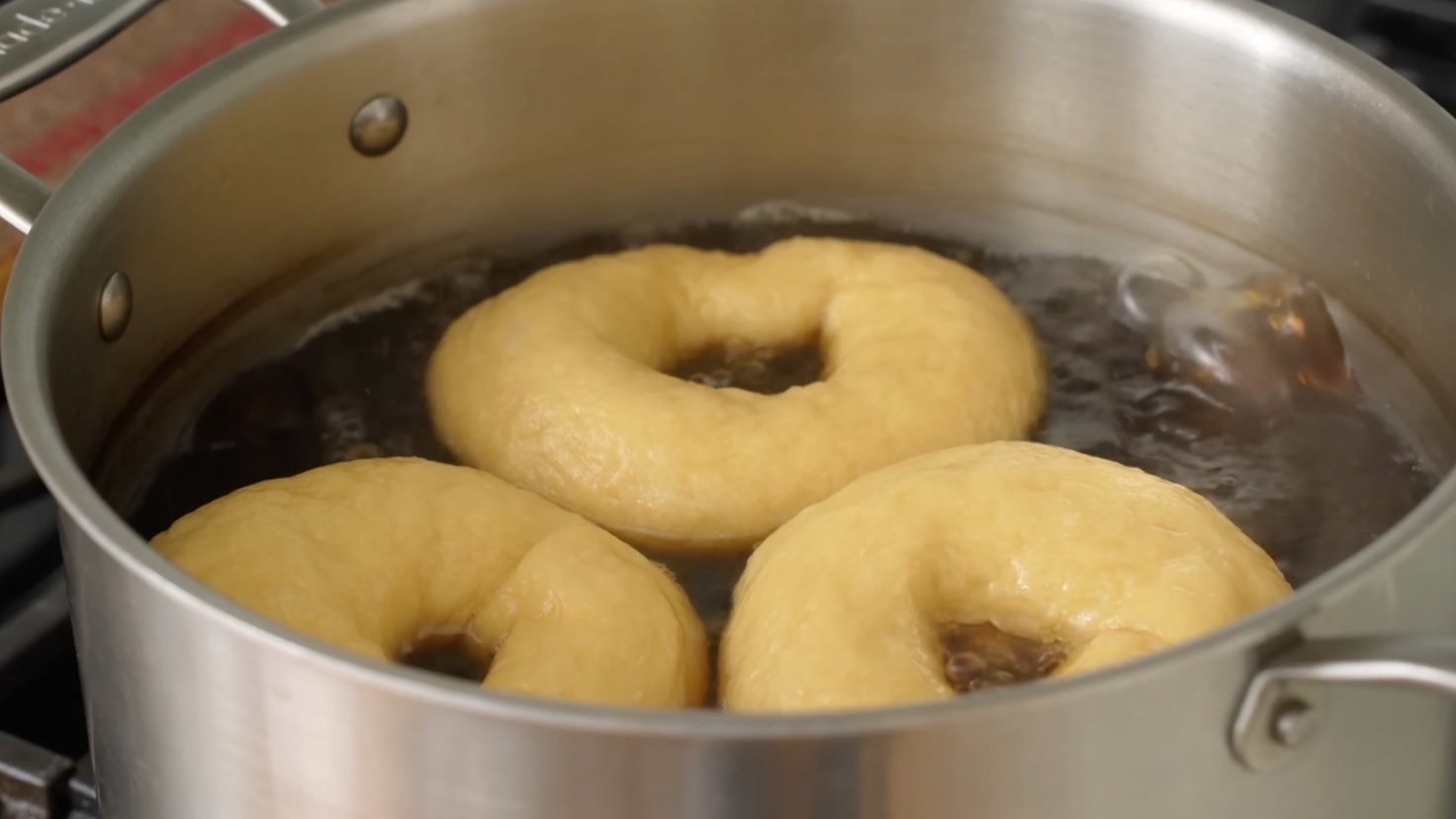 New York Bagels — Brian Lagerstrom
A Little History, Because Why Not?
Legend has it that bagels were invented in Poland in the 1600s. They were given as gifts to women after childbirth—the circular shape symbolized the circle of life. But the boiling trick? That might have come from bread pretzels. Pretzels have been boiled for centuries to get that same chewy texture. So bagels and pretzels are long-lost cousins, separated by a hole and a schmear of cream cheese.
Jewish immigrants brought the bagel to New York City, and the rest is history. The water there? Some people swear it’s magical. (Spoiler: it’s just water, but the nostalgia is real.) Boiling became the non-negotiable ritual that made New York bagels famous, and the tradition spread across the world like a delicious doughy invasion.