
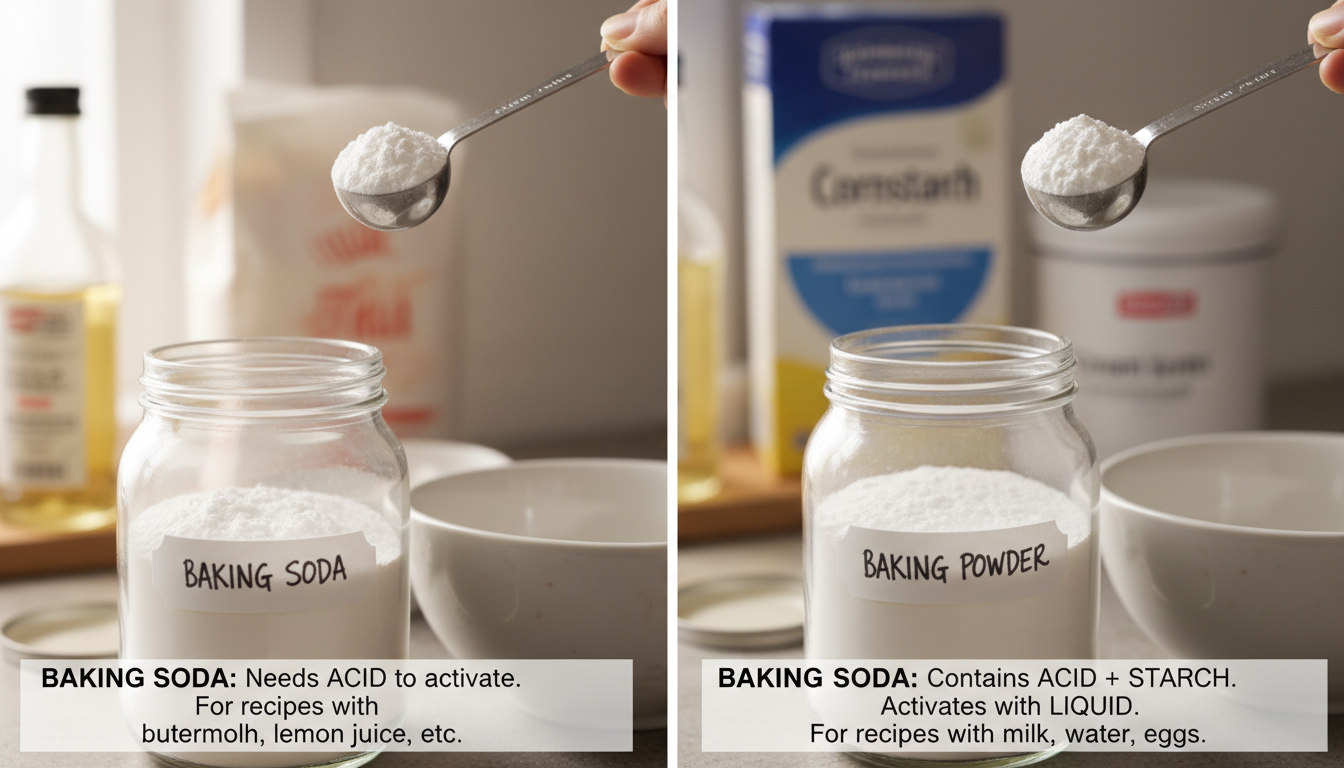
Baking soda is pure sodium bicarbonate. It’s a lone wolf. It needs an acid to activate—think buttermilk, lemon juice, brown sugar, or yogurt. Without that acid, your baked goods taste like a chemistry lab reject.
Baking powder, on the other hand, is a team player. It’s baking soda mixed with a dry acid (like cream of tartar) and a buffer. It just needs liquid and heat to start fizzing. It’s the extrovert of the leavening world.
So when you swap the powder for the soda, you’re removing that built-in acid. You have to bring your own. Simple, right? Wrong. Let’s get specific.
The Switch: Baking Powder → Baking Soda
This is the trickier swap. I don’t recommend it unless you’re desperate. Like, “last cupcake on earth” desperate. Baking powder is milder. Baking soda is a tank.
If you must, use ¼ teaspoon of baking soda for every 1 teaspoon of baking powder. Then—and this is critical—add an acid to your recipe. A squeeze of lemon juice, a splash of vinegar, or a dollop of yogurt.
But here’s the kicker: you’ll change the flavor. That tangy, sharp note? That’s the baking soda party. If you don’t have enough acid, you get a metallic, soapy taste. Yum, right?
The Other Switch: Baking Soda → Baking Powder
This is easier. A lot easier. You just get a fluffier, less assertive bake. For every ¼ teaspoon of baking soda, use 1 teaspoon of baking powder. That’s it. No extra acid needed.
But you’ll lose the browning. Baking soda makes cookies spread and darken like a sunbather in July. Baking powder gives you a paler, cakier texture. Think of it as swapping a tan for a soft glow.
And don’t forget the liquid. Baking powder needs it to wake up. So if your recipe is dry (like a shortbread), this swap might fall flat. Literally.
 Jangan Sampai Tertukar! Ini Perbedaan Baking Soda dan Baking Powder

