
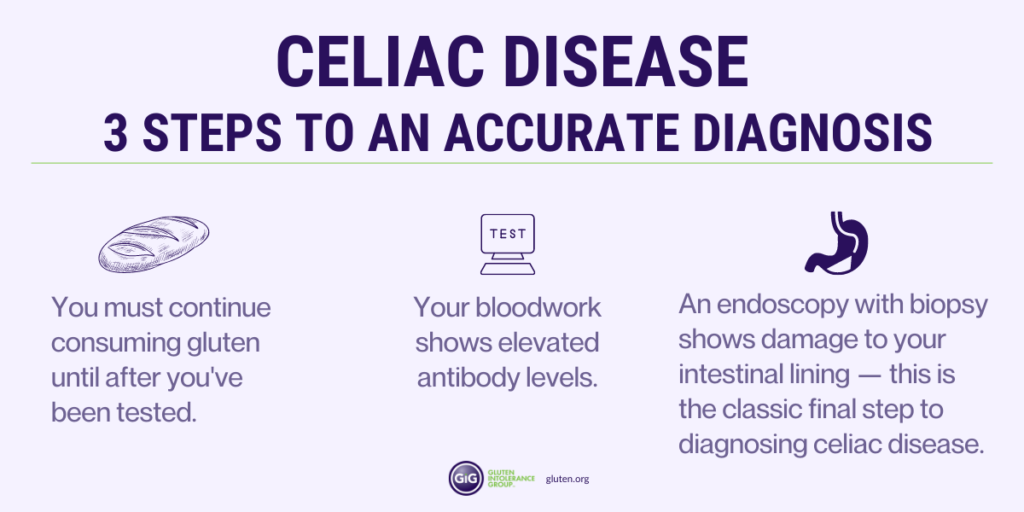
Once you’ve successfully lived off bagels and pain, you make an appointment with your doctor. They’ll order the tTG-IgA blood test (sounds like a robot, but it’s the gold standard). This test hunts for tissue transglutaminase antibodies—the specific fingerprints your immune system leaves behind when it hates gluten. If the levels are high, you’re a strong celiac candidate. High-fives? Not yet.
Now, here’s a little kicker: some people have IgA deficiency, which means this test won’t work for them. Your doc usually runs a total IgA check alongside the tTG test. If you’re deficient, they’ll use a different version, like the DGP test. Don’t be a statistician about it—just trust that a good doctor will order the combo. The blood test is a screening, not a final diagnosis. Think of it as a “maybe” from a very suspicious detective.
 Celiac
A tiny side rant about “alternative” tests
Please, for the love of all that is holy, ignore the stool tests and hair analysis you see on Instagram. Those are the horoscopes of medical diagnostics—vague, expensive, and completely irrelevant. They won’t tell you if you have celiac. They’ll tell you if your hair is fluffy. Stick to the real stuff, my friend.

