
Some companies now sell test strips for PFAS that change color, like a mood ring for water. They’re not as precise as a lab, but they’re great for rough estimates. Dip the strip, wait, compare the color to a chart. It’s like a chemistry set for grown-ups.
These kits are awesome for peace of mind—if the strip shows a high reading, you order the lab kit. If it’s low, you can relax a little. Just know they’re not perfect. They might miss some types of PFAS, kind of like a detective who only looks for red cars.
Still, any data is better than no data. And the process is so easy, you can do it while waiting for your coffee to brew. No hazmat suit required.
A Few Important “Oops” Moments to Avoid
Here’s where I save you from rookie mistakes. Never use a plastic container that had soap or food in it. Residual chemicals can skew your results. Use the sterile vial they give you, or a clean glass jar if you’re improvising (but really, just use the vial).
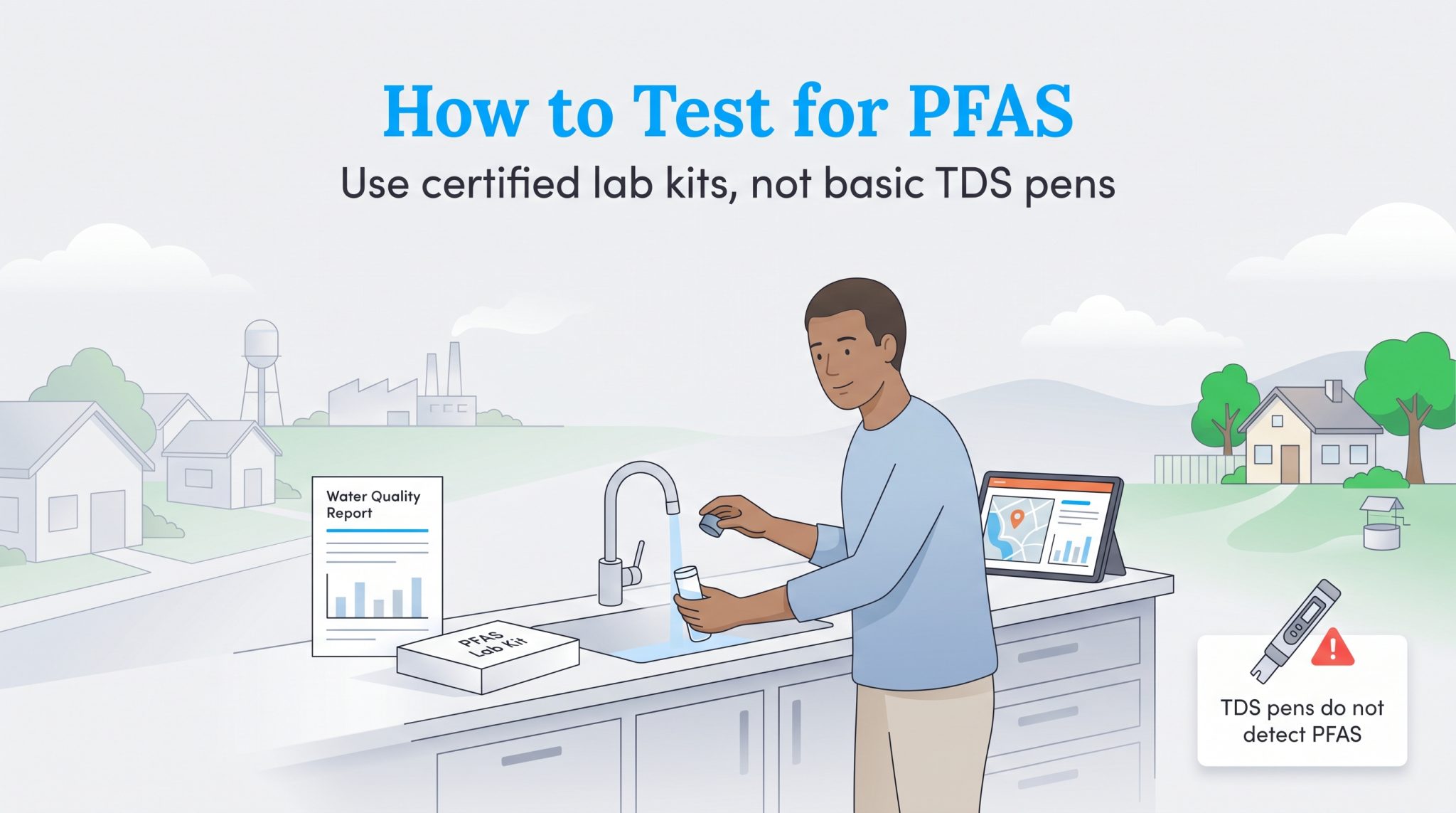 PFAS in Water: What ‘Forever Chemicals’ Are and How to Filter Them
Also, don’t test water from a bottle that says “spring” unless you’re a billionaire. Tap water is what you need, right from the source. And if you have a refrigerator filter, test water both before and after the filter. That’s the power move—it tells you if your filter is a hero or a fraud.
And for the love of hydration, label your samples clearly. There’s nothing sadder than mixing up the “after filter” and “before filter” vials and then arguing with yourself about which one was which. That’s a plot twist nobody needs.

