
Many experienced lobstermen have a quiet tradition: when they pull up a trap with a clear 10-pounder, they sometimes give it a nickname and toss it back. It’s a sign of respect. They call them “jumbos” or “granddaddies,” and they know that letting that old lobster live means it will keep breeding and keeping the population healthy for future seasons.
It’s a little bit like catching a 50-year-old trout in a pond. Part of you wants to eat it to prove you can, but another part of you wants to let it go so you can come back and see it next year. These old lobsters are the royalty of the ocean floor, and they’ve earned their place.
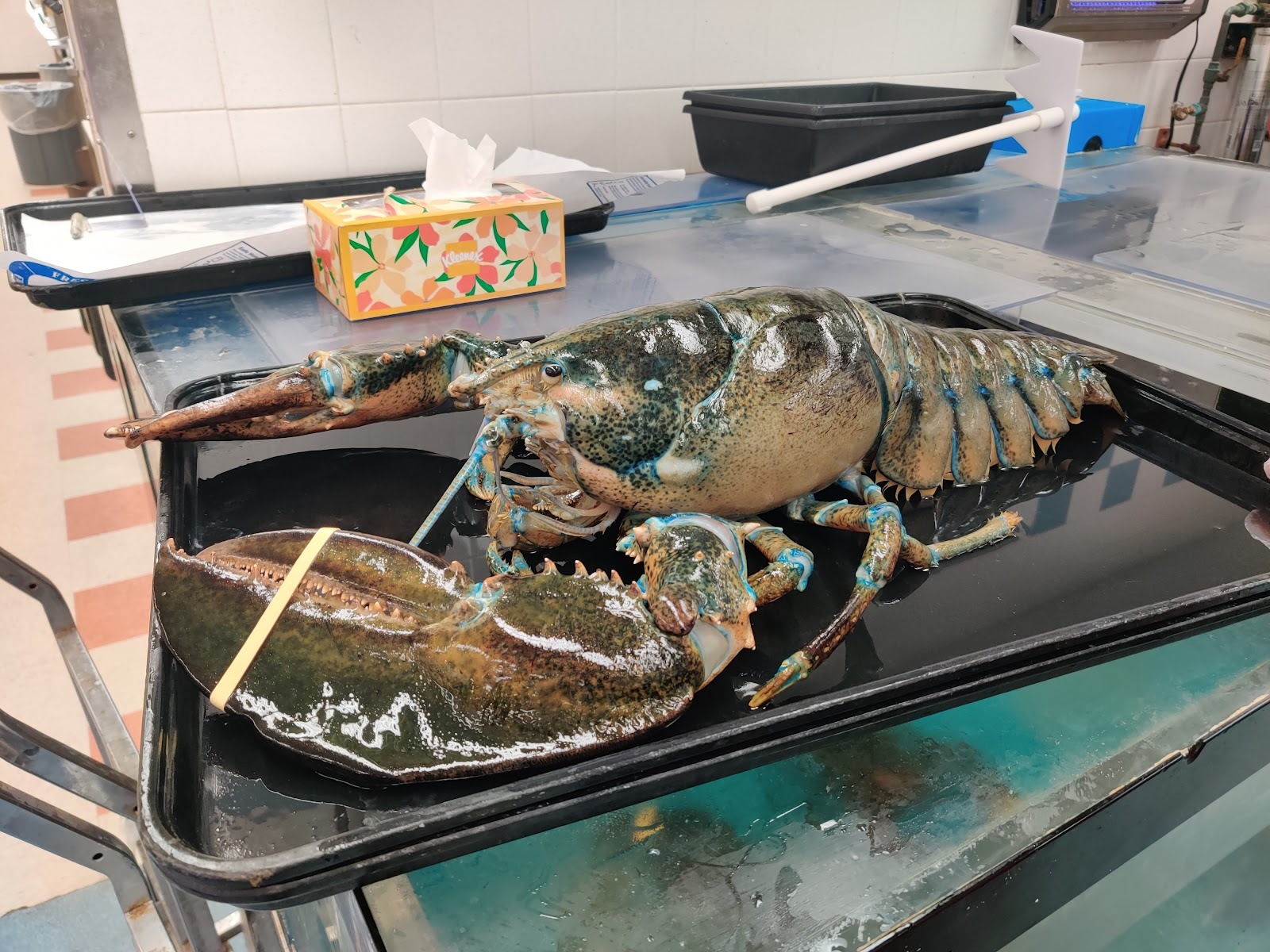 Rare ten-pound lobster with blue joints for sale at local Market Basket
If you do decide to eat one, prepare for very different meat. Young lobster meat is tender and sweet, like milk-fed veal. The meat from a 10-pounder is denser, firmer, and far more robust, almost like comparing a chicken breast to the dark meat of a pheasant. It’s a richer, more intense flavor, but it requires careful cooking so it doesn’t turn into rubber.
A little perspective for your next seafood dinner
So, the next time you see a 10-pound lobster in a tank, don’t just think “dinner.” Try to picture it in 1972, hiding under a rock while the Watergate scandal was happening. Imagine it molting its shell while the Berlin Wall was still standing. This creature has been drifting along, eating dead fish and algae, while you went through school, got your first job, and started reading this article on your phone.
That 50 to 70 year age range isn't just a cool fact. It's a story. It’s a reminder that the ocean holds things that move at a pace we can hardly comprehend. And the most heartwarming part? If you see one in a sustainable fishery, and you choose to eat it, you are literally eating something older than your parents—which is a pretty wild thing to say at the dinner table.
Just be sure to crack the claws slowly. That shell has been hardening since before disco was cool.

