
Your water bill isn’t just for the H₂O itself. It also covers treatment, delivery, and maintenance of the pipes under your street. Think of it as a membership fee for the world’s most reliable convenience service—no trips to the well, no boiling to make it safe.
Most bills break it down into two parts: a fixed charge (a flat fee for being connected to the system) and a usage charge (based on how much you actually use). The usage is measured in units like “CCF” or “gallons.” One CCF equals about 748 gallons, and in many areas, that costs you around $3 to $5.
For a typical family of four, monthly use falls between 8,000 and 12,000 gallons. That sounds like a lot, but it breaks down to just a few dollars per person per day. A leaky toilet, however, can silently double your usage—so keep an ear out for that ghostly hissing sound.
Little Splurges That Add Up (And Don’t)
Remember that time you let the faucet run while brushing your teeth? Each minute wastes about two gallons. If you do that twice a day for a month, you’ve just flushed away 120 gallons—roughly fifty cents down the drain. Not a fortune, but enough to buy a candy bar.
On the flip side, watering a lawn in summer can skyrocket your bill. A single hour of sprinkler use might pump out 1,000 gallons. In some places, that’s an extra $5 to $10 per hour. Suddenly, your green grass becomes a pricey hobby—like paying for a fancy latte every time you turn on the hose.
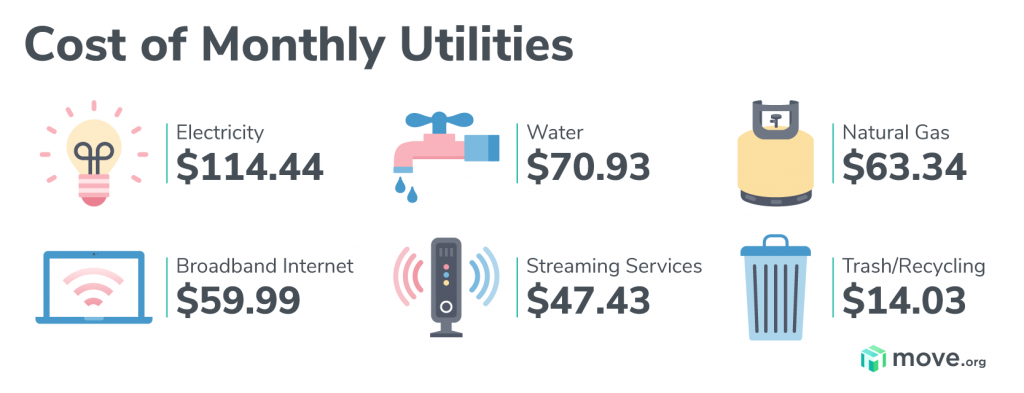 Utility Bills 101: Average Cost of Utilities | Move.org
Here’s a fun reality check: taking a long, hot shower costs about 15 to 30 cents in water and energy combined. That’s cheaper than buying a bottle of water from the store. So go ahead, sing that extra verse in the shower—just don’t leave the water running while you shave.

