Okay, so you’re standing in the grocery aisle, glaring at two jugs. Distilled is cheap, reliable, and kills everything via heat. Deionized is ultra-pure but can be acidic—its pH sometimes drops below 6 because it lacks buffering minerals. (Your plants will hate it. My fern nearly wept.)
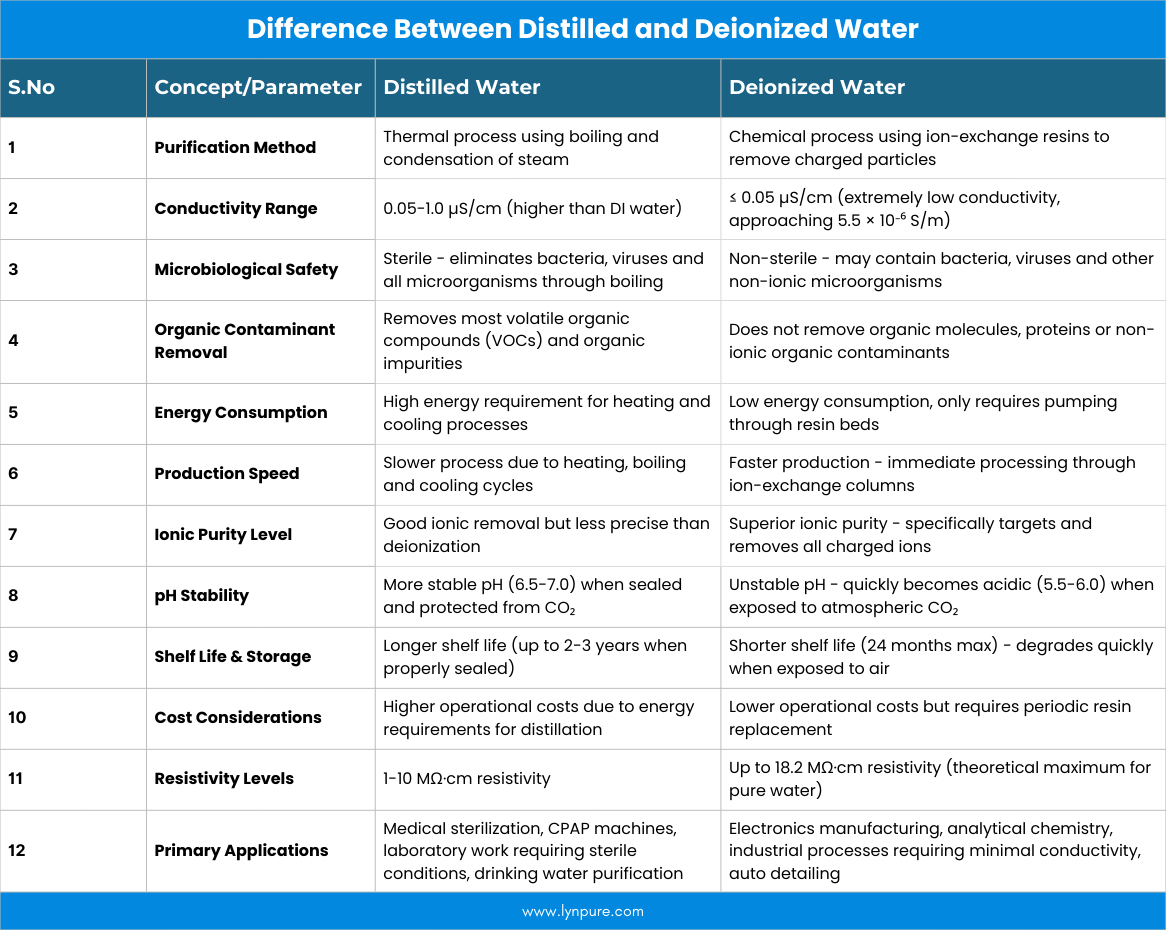 Distilled Water vs Deionized Water | Key Differences
For everyday stuff: distilled is your go-to for steam irons, humidifiers, and baby formula. Deionized? It’s the rockstar for car batteries, lab work, and industrial cooling—places where ions are the enemy. But here’s the curveball: neither is sterile after opening the bottle. Airborne microbes crash the party. So if you need sterile water (for medical gear, say), you need to boil it again. Life is never simple, is it?
A Quirky Truth: They’re Both Thirsty Thieves
Both distilled and deionized water are “hungry” because they’re stripped of minerals. Pour them into a metal cup, and they’ll start dissolving traces of metal. (Your tongue won’t notice, but the cup’s patina will.) That’s why experts say: store them in glass or specific plastics. Also, don’t drink them long-term—they pull minerals from your body. Yes, you can become a human leech. Fun, right?